
"17th century drinks"
500 article(s) found

A brief introduction to the description of flavor, taste and aroma characteristics of Java coffee
Java coffee is full-bodied and full-bodied, with clear, high-quality acidity, high balance, and sometimes nutty taste. In terms of appearance and quality, Java coffee is excellent, just like a woman's vaguely charming, charming and just right, memorable. Java has a mild climate, humid air and diverse climate that makes it a harvest season all year round.

General knowledge of World Fine Coffee Culture Coffee tableware Culture in Italy
Since the opening of the first cafe in Venice in the 17th century, coffee set culture has become one of the undisputed protagonists in Italian culture. According to the Italian news agency ANSA, Italians drink 600 cups of coffee per person per year, ranking sixth in the world, behind the United States, Germany, France, Spain and Britain. In addition, Italy ranks first in the production of espresso coffee machines.
Coffee shops in England
It is known all over the world that English people are addicted to tea. But from the mid-17th century to the early 18th century, the whole of London was soaked in coffee instead of tea. British men switch from drinking to drinking coffee, or both. When they get drunk in a pub, they go to the cafe to sober up with caffeine and then go to the pub to continue drinking. The first coffee shop in England, which appeared at Oxford University in 1650, was a
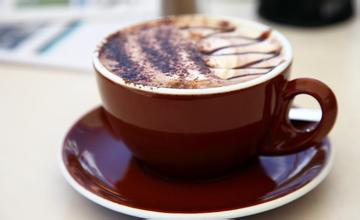
Introduction to the flavor and taste of Lindong Coffee Manor in Sumatra, Indonesia
Mantenin's leaping acid mixes with the richest aroma, giving you a relaxed body flavor to a lively factor in a mild fragrance, and its outstanding taste captivates many suitors. In the 17th century, the Dutch introduced Arabica seedlings to Ceylon (present-day Sri Lanka) and Indonesia. In 1877, a large-scale disaster hit the Indonesian islands, and coffee rust destroyed.

The London War between Coffee and Black Tea
Following Cafe (official Wechat account vdailycom) discovered that the coffee craze in Britain had been going on for a century, but in the mid-18th century, it suddenly came to an end. Because the age of black tea has come. The London War between Coffee and Black Tea (excerpt from the Pirate of World History) Oxford is located in the inland university slightly northwest of London.
Coffee in Japan
As early as the end of the 17th century, the Dutch brought coffee to Asia in the early 18th century, and coffee was soon introduced to Japan. Before and after the Meiji Restoration, Japan advocated total westernization, and the coffee culture with Dutch flavor took root in Japan. During the Taisho period (1879-1926), due to the pervasive atmosphere of freedom and democracy, fresh and luxuriant culture, cafes have been very prosperous. But with the Japanese army,

Historical Development of Coffee Culture-Historical Development of semi-automatic Coffee Machine
The Historical Development of Coffee Culture-the Historical Development of semi-automatic Coffee machines Europeans first came into contact with coffee around 1515-1519, but were not interested in it for a long time. In 1585, 30 years after the emergence of the cafe in Istanbul, the Vatican's envoy to the area, Morosinny, reported that these people were all humble, tacky and unenterprising.

Dangerous drinks: how Coffee creates a Culture of Resistance
Professional coffee knowledge exchange more information about coffee beans please follow the coffee workshop (Wechat official account cafe_style) Coffee as a "Drug" David. In his book five hundred years of Addiction, David T. Courtwright tries to define the English word "Drug" as a neutral concept: "addiction", that is, all addictive or addictive.

The coffee variety with the highest caffeine content-the caffeine content of a cup of coffee
Coffee with the highest caffeine content-caffeine in a cup of coffee is also a common ingredient in soft drinks, such as cola, which was originally made from cola fruit. A soft drink usually contains 10 to 50 milligrams of caffeine. Energy drinks, such as Red Bull, contain 80 milligrams of caffeine per bottle. The caffeine in these drinks comes from the original ingredients they use or

The latest introduction of Java coffee with unique aroma and boutique coffee
Among the Asian coffee-producing countries, Indonesia is a very noteworthy one. Indonesia is an island country in the Indian Ocean, the islands are distributed on both sides of the equatorial line, of which three islands: Java, Sumatra and Sulawesi produce the world's important coffee. In the mid-17th century, the Dutch brought coffee trees to Ceylon (Sri Lanka) and Java, Indonesia. India in the 18th century
Coffee healthy living knowledge Coffee and male ability
Today's title is sensational, but it is also a controversial topic for a long time. As early as the 17 th century, in 1635, the German traveler Adam. When Adam Olerius traveled to Persia (now Iran) to record coffee, he put forward the argument that coffee leads to sexual coldness. But during the same period in 1627, the British explorer Thomas. Thomas Herber to Persia

Coffee and Japan
As early as the end of the 17th century, the Dutch brought coffee to Asia in the early 18th century, and coffee was soon introduced to Japan. Before and after the Meiji Restoration, Japan advocated total westernization, and the coffee culture with Dutch flavor took root in Japan. During the Taisho period (1879-1926), due to the pervasive atmosphere of freedom and democracy, fresh and luxuriant culture, cafes have been very prosperous. But with the Japanese army,
A mocha pot is a coffee pot.
Historically, the word mocha has been used as a nickname for coffee, and coffee is mocha. The coffee pot is the mocha pot. Invented by the Italians. Why is coffee a mocha? In the early 17th century, the first Yemeni coffee sold to Europe was exported through the ancient port of Mocha. Europeans (first of all, the merchants of Venice, Italy) called the delicious coffee shipped from the port of Mocha Mocha Coffee.

History of Coffee Culture Holland has a deep relationship with coffee
The Netherlands is reminiscent of flowers and cheese. in fact, the Netherlands has a deep relationship with coffee and is the first western country to get involved in coffee trade and cultivation. Coffee spread to Europe in the 17th century, causing controversy in Italy, England, France and Germany, and even banning drinking. However, the pragmatic Dutch saw huge business opportunities and accepted coffee without resistance. After careful layout and regulation

The Netherlands has a deep relationship with coffee and coffee culture
The Netherlands is reminiscent of flowers and cheese. in fact, the Netherlands has a deep relationship with coffee and is the first western country to get involved in coffee trade and cultivation. Coffee spread to Europe in the 17th century, causing controversy in Italy, England, France and Germany, and even banning drinking. However, the pragmatic Dutch saw huge business opportunities and accepted coffee without resistance. After careful layout and regulation

Rich and solid Indonesian coffee Fuyin Manor Coffee Flavor and Taste introduction
The word Indonesia comes from the Greek Indus and nsos, which refers to the islands of India. The name has existed since the 18th century and predates independent Indonesia. British ethnologist George George Windsor Earl published the word Indunesians in 1850, but he preferred to use Malayunesians- to refer to the East Indies and Malay.
Coffee training Culture-Coffee and Japan
As early as the end of the 17th century, the Dutch brought coffee to Asia in the early 18th century, and coffee was soon introduced to Japan. Before and after the Meiji Restoration, Japan advocated total westernization, and the coffee culture with Dutch flavor took root in Japan. During the Taisho period (1879-1926), due to the pervasive atmosphere of freedom and democracy, fresh and luxuriant culture, cafes have been very prosperous.

Boutique coffee beans Indonesian Java Coffee latest Coffee introduction
Among the Asian coffee-producing countries, Indonesia is a very noteworthy one. Indonesia is an island country in the Indian Ocean, the islands are distributed on both sides of the equatorial line, of which three islands: Java, Sumatra and Sulawesi produce the world's important coffee. In the mid-17th century, the Dutch brought coffee trees to Ceylon (Sri Lanka) and Java, Indonesia. India in the 18th century

Flavor characteristics of micro-batch coffee in Chateau Borha, El Salvador how to drink Salvadoran coffee?
Coffee knowledge exchange more coffee bean information Please follow Coffee Workshop (Wechat official account cafe_style) in the mid-19th century, after the disintegration of the Union, El Salvador became independent from Nicaragua, its cash crop is mainly locust blue, which is a crop used to make indigo dye, until the invention of chemical dyes in the mid-19th century, these lands were converted to growing coffee. Because it's expensive.

Why do foreigners like drinking coffee? This paper briefly introduces the origin and development history of foreign coffee.
The earliest coffee beans originated in Ethiopia. In 525 AD, Ethiopian troops invaded Yemen, and coffee beans were brought to Yemen by soldiers. According to records, coffee trees began to be planted in Yemen in 575 AD. Later, coffee beans were also brought to Egypt by Sudanese black slaves who were shipped to Egypt. After coffee was introduced into the Arab world, it was first used as a herb by Arabs to treat biases.